
3-Reel Slots in the UK: How They Work
 Available in GB
Content
Three visible reels do not guarantee identical rules: each game’s paytable defines recognised combinations and outcomes.
What a Three-Reel Slot Actually Looks Like
A three-reel slot is named for the number of vertical reels shown in its main game area. You see three columns of symbols, with a window revealing part of each reel. When a spin ends, the symbols stop in place and form a pattern across that window. That compact layout is the first thing you notice; it is also the simplest way to distinguish the format from a 5 reel slot game.
The name describes the visible reel count, not a complete set of rules. A game’s paytable explains which symbol combinations count and how they are assessed. Some patterns may run across a row, while a particular game may define other ways to form a result. So I would not assume that every three-reel title uses the same winning arrangement just because the screen looks familiar.
A useful mental picture is a small grid: three columns, with symbols visible in each. The reels are the moving parts; the rows are the positions where symbols can appear once they stop. The outcome comes from the arrangement the game recognises, rather than from simply spotting a symbol you like. The precise display and rules belong to the individual game.
Choosing a reel slots site is easier when you know what practical details to check. Use this shortlist to consider payout timing as you decide what suits you.
1. SpinFormula
Payout speed: 1-3 business days
SpinFormula lists a payout speed of 1–3 business days, giving you a clear timeframe to consider.
2. Revery Play
Payout speed: 1-3 business days
Revery Play lists payouts at 1–3 business days, a useful detail for you to weigh when choosing.
3. Zombillion
Payout speed: 1-3 business days
Zombillion’s stated payout speed is 1–3 business days, so you can factor that timing into your choice.
4. Jetsetspins
Payout speed: 1-3 business days
Jetsetspins lists a payout speed of 1–3 business days for you to keep in mind.
5. Dieselwin
Payout speed: 1-3 business days
Dieselwin states a payout speed of 1–3 business days, which gives you a timeframe to consider.
6. NightLuck
Payout speed: 1-3 business days
NightLuck lists payouts at 1–3 business days, helping you assess whether the stated timing works for you.
7. SlotoSport
Payout speed: 1-3 business days
SlotoSport’s listed payout speed is 1–3 business days, a practical point for you to note.
8. x3bet
Payout speed: 1-3 business days
x3bet lists a payout speed of 1–3 business days for your consideration.
9. BeOnBet
Payout speed: 1-3 business days
BeOnBet states that payouts take 1–3 business days, giving you a stated timeframe to factor in.
10. NightWin
Payout speed: 1-3 business days
NightWin lists payouts at 1–3 business days, which you can take into account when considering your options.
A five-reel slot has two more vertical reels in its main layout, giving it a wider field of symbols. It can also have a bet applied across all five reels. That is a structural difference, not proof that one format is automatically more generous, more complicated or more entertaining. The reel count tells you what the layout looks like; it does not, by itself, tell you what a spin will return.
When comparing the two, keep the picture separate from the mechanics. Three columns may make a game feel more direct to read, while five columns give the screen more room. But neither description establishes how many winning patterns a game has, what its symbols pay, or whether extra features appear. Those details vary from title to title and are set out in the game information.
I find it helps to look at the screen before attaching a label to the experience. Count the reels, then check the rules shown for that specific game. If a title is presented as a three-reel game, you should be able to see three vertical reels in its central play area. If the layout or wording seems different from what you expected, the paytable and game information are a better guide than the broad category name.
That distinction is handy when you are browsing 3 reel slots in Britain. The phrase gives you a starting point for the layout, not a promise about theme, pace or potential results. Two games can share the same reel count and still work differently. The format is the frame; the game’s own rules fill it in.
RTP Casino Slots in the UK: Understanding High Returns
In short, a three-reel slot has three visible reels, while a five-reel game has five and can apply a bet across all of them. Once you have that basic picture, it is easier to judge what the label tells you—and what it leaves for the individual game to explain.
Classic Reels, Fruit Symbols and the Old-School Feel
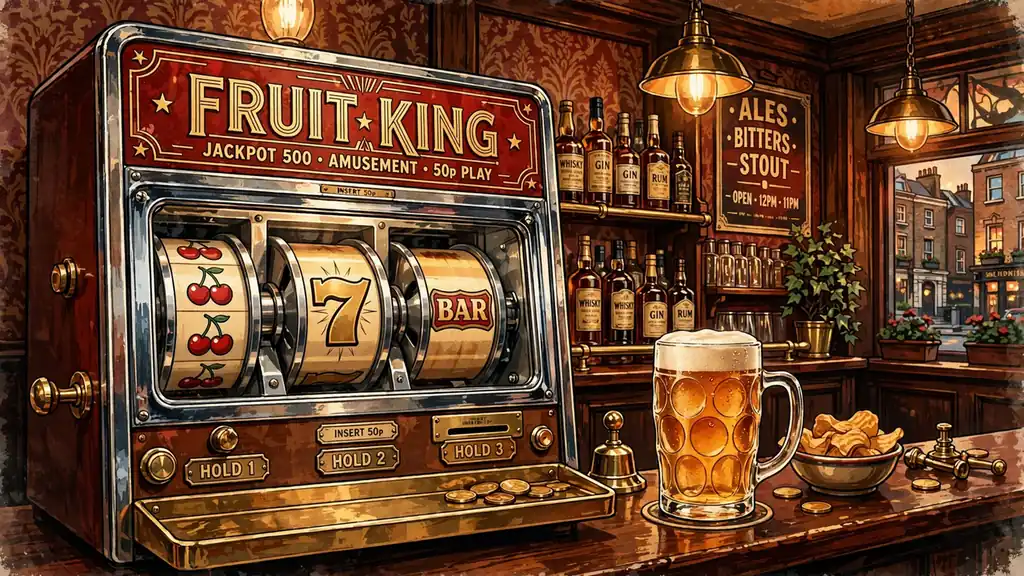
The appeal of classic three-reel slots is often visual before it is anything else. You see a compact set of spinning reels, familiar fruit imagery and bold symbols designed to be read at a glance. There is little of the cinematic scenery or busy animation associated with many modern video slots. The presentation feels closer to the simple, bright face of a traditional fruit machine.
That difference matters if you are choosing what to play. A classic game tends to put its symbols front and centre; the theme is carried by the reels rather than by a long sequence of scenes. Fruit, bells, bars and sevens are common parts of the old-school visual vocabulary. They are familiar enough that you can recognise the style immediately, even if the particular game is new to you. No elaborate backstory required.
The fruit-machine association is especially strong in Britain. For many players, fruit symbols suggest the look of a familiar arcade or pub machine, even when the game is on a screen rather than a physical cabinet. Online versions borrow that visual shorthand: bright colours, clear icons and a straightforward layout. The result can feel recognisable without being an exact recreation of any particular machine.
Classic reels often use a visual vocabulary of fruit, bells, bars, and sevens, reflecting the look of traditional British arcade or pub machines.
I find that the charm is partly in the restraint. Classic reels do not need a detailed world around them to establish their character. A fruit symbol, a bell or a row of sevens can do the work. The screen may feel less crowded, and the symbols are often easier to take in at a glance than the layered artwork of a video slot. That does not mean every classic game looks identical; developers can give the same broad style a different palette, shape or mood.
Classic slots and video slots
The distinction between classic slots and video slots is mainly one of presentation and theme, not a promise about how a game will behave. Classic slots lean on the visual language of older fruit machines: reels, familiar icons and a compact overall look. Video slots often build a more elaborate theme around their symbols, using characters, settings or animated sequences to create a stronger sense of spectacle.
If you want a game that feels uncluttered, the classic look may suit you. If you prefer a screen with more visual detail and a stronger theme, a video slot may be more to your taste. Neither label tells you everything about the game. The appearance is a useful first impression, not a substitute for checking the individual game’s information.
Highest-RTP Slots in the UK: How to Read the Figures
There is also a difference in mood. A traditional fruit-machine style can feel direct and familiar, while a heavily themed video slot may feel more like a small piece of entertainment built around its setting. That is a matter of taste, not a ranking. I would not call one style more rewarding simply because it looks more exciting, or assume that a plain screen has simpler rules. A tidy design can still have details worth checking before you play.
When you browse for a classic three-reel game, look at the actual screen rather than relying on the label alone. Does the art use fruit symbols and traditional machine cues? Is the layout as clean as you expected? Does the overall presentation suit the kind of session you want? Those are sensible questions about style. They do not require you to treat a familiar look as evidence about a game’s results.
The fruit-machine feel
Fruit symbols work because they are immediate. You do not need to learn a cast of characters or understand a plot before the reels make sense as a picture. A cherry, lemon or bell is easy to recognise; the imagery gives the game a distinctly old-fashioned character without demanding much attention from you. Bars and sevens add to that familiar visual vocabulary.
That simplicity can be a welcome change if you have spent time with games full of flashing effects and layers of themed artwork. The classic style makes the symbols the main event. It can also be nostalgic, though nostalgia is personal: one player may associate the look with a familiar local machine, while another may simply like its clean design. The screen cannot recreate the feel of standing at a physical machine, but it can borrow the visual cues.
Attention: Do not confuse visual simplicity with a guarantee that you will understand every rule just by looking; always read the displayed pay information.
There is a practical side to that uncluttered look, too. You can focus on the symbols and the game screen rather than following a story. But do not confuse visual simplicity with a guarantee that you will understand every rule just by looking. The pay information and game details still matter. If you are unsure what a symbol or feature means, pause and read the displayed explanation before continuing.
Free play as entertainment
You may also come across classic games that can be tried in free play. That can be a pleasant way to enjoy the old-school look without turning the session into real-money gambling. Treat it as entertainment: demo credits are not cash, and free play does not award payouts. A run of pretend credits cannot be cashed out later.
That distinction is easy to lose when the screen looks much like a real-money game. The familiar reels and symbols may be the same style, but the credits in a free version are only for play. They do not represent money you have won, and they cannot become a cash balance. If what you want is the look and rhythm of a fruit-machine-style game, free play can meet that interest on its own terms. It is not a route to a cash prize.
For me, that is the cleanest way to think about it: the classic style is a design choice, and free play is an entertainment mode. One tells you what the game looks and feels like; the other tells you that no real payout is involved. Keep those ideas separate and the old-school appeal is easier to enjoy for what it is. The look is the point.
Bonus Buy Slots in the UK: Demo and Real Play
Playing Three-Reel Slots Online in Britain
Finding a three-reel game on a casino site is the easy part. Before you play online, check who operates the site and whether that business is authorised to serve customers in Great Britain. A familiar-looking game or polished page is not proof of a valid licence.
The UK Gambling Commission (UKGC) regulates commercial gambling in Great Britain, including online casinos. Its remit covers remote gambling offered to people in Great Britain even when the operator’s equipment is located elsewhere. The Commission issues operating licences to businesses; it also issues personal licences to individuals in relevant roles. For you, the practical check is the operator’s authorisation, not the location of its servers.
Check the operator, not just the game
Before depositing, look up the casino on the UKGC’s public register and verify its licence number. Make sure the registered business name matches the company operating the site. A logo or a line of text claiming that a casino is licensed is not the same as confirming the entry yourself.
This matters whether you are looking for classic three-reel slots online or a broader selection of casino games. A game’s provider and the casino hosting it are different businesses. Seeing a recognised game-provider name does not tell you whether the site taking your deposit is licensed. Check the casino’s operating details directly.
The Commission is the sole regulator for commercial gambling in Great Britain. Online casinos serving British customers must hold the relevant UKGC licence; an overseas address does not remove that requirement. If the business cannot be found on the register, or the details do not line up, do not treat the site as an authorised option.
Verify Operator Licence
- Look up the casino on the UKGC public register
- Verify the licence number
- Confirm the registered business name matches the site
Read the account and payment conditions
A licensed site should explain its terms, identity checks and account controls clearly. Operators must verify a customer’s age before allowing a deposit. Online gambling in the UK is for adults aged eighteen and over, and age verification is part of opening an account for real-money play.
You should also be able to find information about setting financial limits and getting help if something goes wrong. Remote operators must prompt new customers to set a financial limit before their first deposit and provide accessible account-level limit controls. UKGC-licensed casinos must offer responsible-gambling tools, including self-exclusion. These are account protections, not decorative links at the bottom of a page.
Payment rules are worth checking too. UK-licensed casinos cannot accept credit cards for gambling, including credit-card funding routed through a money-service business. They also cannot accept wallet payments where the wallet lets you use credit-card funds for gambling. If a site presents a credit card as an available way to fund casino play, pause and check what is going on.
Know where to raise a complaint
A licensed casino must provide an internal complaints process and access to an approved Alternative Dispute Resolution service. Find those details before you need them. If a payment, account decision or other issue becomes difficult to resolve, you will want to know how the operator handles complaints and which independent service can consider a dispute.
I make that check early, while the site is still just a page on my screen. It is easier than trying to locate the rules after a problem has started.
Live Casino UK: How Tables and Streams Work
The UKGC’s role is regulatory: it licences operators and oversees commercial gambling in Great Britain. It does not turn every game into a suitable choice for every person, and a licence is not a promise of a particular outcome. It tells you the operator is within the local regulatory system, while the site’s own terms explain how its accounts and services work.
So, when you come across online three-reel slots, treat the game catalogue as only one part of the decision. Confirm the casino’s current licence on the public register, check that the registered business matches the site, and make sure the account, payment and complaint information is easy to find. If those basics are unclear, move on. A few minutes spent checking is time well spent.
Trying a Slot for Free: What Demo Play Does and Doesn’t Do
A free-play mode is a way to get familiar with a slot without wagering real money. If a three-reel game offers a demo, you can try its on-screen controls and see how a session feels without putting cash at risk. It can be useful when you want to explore a game before deciding whether it suits you.
The credits shown in a demo are not money. They are play-mode credits, and any balance or apparent win stays inside that mode: the game awards no cash payout. You cannot turn demo credits into a withdrawal or use them as a record of money you have won. Treat the display as part of the practice experience, not as an account balance.
Demo Credits
Demo credits are not real money and cannot be cashed out or turned into a withdrawal.
What you can learn from a demo
A demo can help you get your bearings. You can see where the controls are, read the information the game provides and follow what happens on screen after a spin. If you are new to this format, that may answer basic questions about how to play a three-reel slot without having to learn while wagering.
It can also give you a feel for the presentation: whether the pace, sounds and visual style appeal to you, and whether the instructions are clear. I find that simple check useful. A game can look straightforward in a picture and feel quite different once you are interacting with it.
Still, a few demo spins do not tell you whether a slot is likely to pay well. A run of wins in free play is not evidence that real-money play will produce the same result, and a quiet demo run does not prove the reverse. Demo outcomes do not create a promise about later play. Looking for a “best-paying” game based on a brief practice session is a dead end.
What demo play cannot do
Free play is not a way to win cash, even if the screen shows a large credit total or a winning combination. The credits are fake, and the mode makes no payout. That distinction matters: the game may look much like its real-money version, but the experience has no cash result.
Online Slots Payout Percentage: What It Means
Nor can a demo show you what a real-money session will feel like financially. With no money at stake, there is no real loss to manage and no cash win to take away. A practice session can help you understand the interface; it cannot prepare you for every feeling or decision that comes with wagering.
If your aim is simply to try three-reel slots free, use the mode for what it offers: a low-pressure introduction to the game on screen. Read the displayed rules rather than guessing from the reels, and stop if the demo is not enjoyable. There is no need to move from practice into wagering just because you have used up the demo credits or seen a run of wins. Free play is entertainment, not a route to cash.
Real-Money Play and the Limits of a Slot Session
Moving from free play to real-money play changes what a spin means. In a demo, the balance is only part of the game interface; a win does not become money you can withdraw, and a loss does not come out of your pocket. With real money, the stake is yours, and any result affects your gambling balance. That difference matters whether you choose an old-fashioned three-reel game or a newer slot with a retro look.
Before you deposit, the operator must verify your age. It must also prompt you to set a financial limit before your first deposit and give you access to account-level limit controls. I would treat those controls as part of the session setup, not as a promise that a session will stay comfortable. Decide what you can afford to lose before you start, then stop when you reach that boundary.
Stake Limits
The maximum stake for an online slot cycle in Great Britain is £5 for customers aged 25+ and £2 for those aged 18 to 24.
A specialist review reports that the maximum stake for an online slot game cycle in Great Britain is £5 for a customer aged 25 or older, and £2 for someone aged 18 to 24. The limit applies to the total stake in a cycle, not to each reel separately. It is a ceiling, not a suggested amount: you can choose to stake less. That distinction is easy to miss when you are browsing real-money three-reel slots and the game displays a stake control beside the reels.
The cap does not make every game, or every session, equally costly. A smaller stake means less money is exposed on each cycle, but it does not alter the game’s underlying return structure. Nor does a legal maximum tell you what a particular game will pay, how often it will produce a win, or how long your balance will last. Those details depend on the game itself and the sequence of results you happen to get.
Most importantly, the stake limit does not remove the house edge. If a game has a positive house edge, its mathematical expectation is negative over enough sessions, however slowly the losses arrive. A session can still end in profit; that is a possible short-term result, not evidence that the game has changed in your favour. The cap limits the size of a stake per cycle, not the long-run arithmetic.
This is why I would separate the question “Can I play this slot?” from “How much should I put at risk?” You may be able to play a fruit-machine-style game for real money, but the familiar symbols do not soften the financial consequences. A smaller stake can make each cycle less expensive, yet repeated play still exposes your balance to repeated outcomes. Set a stop point while your head is clear. Once play is under way, it is much easier to keep going because the next spin feels close.
First Deposit Bonus Casinos in the UK: Terms to Check
If you are trying a game after using its free mode, reset your expectations along with the balance. Demo credits are not a rehearsal of cash winnings; they have no cash value. Real-money play is a different decision, with actual funds at stake and a fixed upper limit per game cycle. Keep the distinction plain. No free spin turns into a payout.
Reels, Paylines and Features: Check the Game, Not the Label
A three-reel layout tells you how many reels are shown; it does not tell you how a particular game pays or what its features do. I check the game’s paytable and rules before deciding what I’m looking at. The title and artwork can suggest a style, but they are no substitute for the instructions.
Start with the paylines. The rules should show which symbol patterns count, where they need to land and whether a line has to run in a particular direction. A game may display lines across the reels, or explain a different way to form a winning combination. Don’t assume that matching symbols anywhere on the screen will count. The paytable is the place to settle that.
Then look for the feature rules. If a game advertises wild symbols, a bonus round or another special mechanic, check what triggers it and what happens next. A feature’s name alone doesn’t tell you its conditions. Some games may have few extras; others may spell out several. That variation is why there is no single template for 3 reel slot features.
Do
- Check the paytable for winning patterns
- Read the trigger conditions for features
- Verify how a win is formed
Don’t
- Assume symbols anywhere on screen count
- Rely on the game label for mechanics
- Expect all wild symbols to work identically
The same applies when you see a game described as having features. Read the rules for that specific title rather than expecting a familiar mechanic to work the same way elsewhere. If you are trying free play, the displayed rules can still help you understand the layout, but the play mode does not change the game’s stated mechanics.
Low-volatility five-reel games make a useful contrast, not a blueprint for three-reel titles. They typically have five reels and at least twenty-five paylines, fixed jackpot amounts rather than progressive pools, and bonus rounds that multiply accumulated wins. Those characteristics describe a common pattern for that group; they do not establish what any three-reel game offers.
So I treat “three reels” as a description of the screen, not a promise about lines, symbols or bonuses. Check the paytable, confirm how a win is formed, and read each feature’s conditions before playing. A quick look saves guesswork.
Odds, Volatility and What a Run of Spins Can Tell You
Volatility describes the pattern of a slot’s returns, not whether the game is more likely to make you money. A low-volatility game tends to produce smaller wins more frequently. A high-volatility game tends to go longer without a win, with larger payouts when one does arrive. Neither label tells you what will happen in your next run of spins.
For low-volatility titles, a commonly reported average is a winning combination every three to six spins across most games. Read that as a broad description of game behaviour, not a schedule. It does not mean a win is due after several losing spins, or that a particular session will include one. Each result remains uncertain; a run can be quieter or busier than the average suggests.
Progressive Slots Online UK: How Jackpots Work
That distinction matters when you look at 3 reel slot machine odds. The number of reels alone does not tell you the volatility, the probability of a particular result or the size of a potential payout. Those details depend on the individual game. A three-reel layout might feel simple to follow, but simple-looking reels do not make outcomes predictable. Check the game’s own information rather than reading a promise into its style.
I used to take frequent small wins as a sign that a game was treating me kindly. They can make a session feel steadier, but they are not proof of an overall profit. A win is only one part of the result; what matters to your balance is how wins compare with the stakes over time. Dry distinction.
The house edge is separate from volatility. If a game has a positive house edge, its mathematical expectation for the player is negative over enough sessions. Lower volatility can spread losses more gradually among smaller returns, while higher volatility can make the swings sharper. Neither changes that long-run expectation.
So, when you see a description of frequent wins, treat it as a clue about the rhythm of play, not a forecast or a measure of your chance to come out ahead. A short run of results cannot establish that a slot is due, on a streak, or likely to pay next. Volatility tells you how wins tend to be distributed; it cannot tell you when your next one will land.
Understanding Volatility
- Low-volatility games tend to produce smaller wins more frequently
- High-volatility games have longer dry spells with larger potential payouts
- Volatility describes the rhythm of play, not a forecast of future wins
- Neither volatility level removes the house edge
No Download, No Registration: Convenience Versus Caution
A browser-based slot can be appealing when you want to open a page and see what is available without installing software. Some sites also offer a free preview without asking you to create an account. That can make it easier to explore, but it tells you very little about the site behind the game.
“No download” describes how you access a page, not whether the operator is trustworthy. A polished game window is not proof that the site is properly regulated, that your details will be handled responsibly, or that the experience is suitable for you. I treat the game screen and the operator as separate things: the first is what you see; the second is who is providing access.
The same goes for playing without registration. Where a free mode is available, it may let you look around without opening an account, but it is not real-money play. Any credits shown in such a mode are not cash, and no payout is awarded. If you move towards real-money gambling, an account is part of that process, and operators must verify your age before allowing a deposit.
For players in Britain, online gambling is legal only through sites licensed by the UK Gambling Commission. A no-account preview does not establish that the operator holds the required licence, and it should not be treated as a shortcut around checking who runs the site. Convenience is useful; it is not a safety check.
I also avoid handing over personal details just because a page offers a game immediately. Read the site’s terms and privacy information, and be wary if the operator is unclear about its identity or how to contact it. A frictionless entrance can be pleasant. It can also leave you with fewer clues about where you have landed.
If you only want a quick look, browser access may suit you. If you are considering depositing, pause and assess the operator, not just the game. No install required. No judgement skipped.
Keno Online Casinos in the UK: How to Compare
A Simple Strategy for Traditional Slots
I treat a traditional three-reel slot as entertainment with a clear stopping point, not a puzzle I can solve. There is no sequence of symbols, lucky time or betting pattern that turns the game into a dependable way to make money. If a game has a positive house edge, its mathematical expectation is negative over enough sessions. The losses may arrive gradually, but patience does not make the arithmetic friendlier.
That is why my first decision is about the session, not the next spin. Decide beforehand what you are comfortable spending and when you will stop. Stick to that limit whether the reels have been quiet or have just produced a win. A run of good results is not a reason to assume the next one is due; a run of losses is not a reason to chase them. The machine has no memory to consult.
Volatility affects the feel of play, not the long-run direction. Low-volatility slots tend to spread returns across many smaller wins. High-volatility slots pay less often, with larger wins when they arrive. The first can feel steadier; the second can involve longer dry spells. Neither style removes the house edge, and a lively session is not evidence that you have found a system.
I also avoid changing my plan in response to every spin. If a game stops being enjoyable, I leave it rather than raising my stake to force excitement or recover a loss. That is a session choice, not a trick for beating the slot. Small distinction. Important one.
For traditional 3 reel slots, a sensible strategy is therefore plain: know why you are playing, set a personal stopping point, and keep the result separate from your next decision. A win does not prove your approach worked; a loss does not mean you need to stay longer. No strategy can promise a profit, but a firm plan can keep one session from quietly becoming a different one.
Related posts

Top-Rated Online Casinos in the UK: Amatic Guide

Wazdan Casinos in the UK: Check Game Availability