
Most trustworthy online casino UK: what to check
 Available in GB
Content
A licence is a starting point, while public records, terms, self-exclusion and account controls add context.
What a UK Casino Licence Actually Tells You
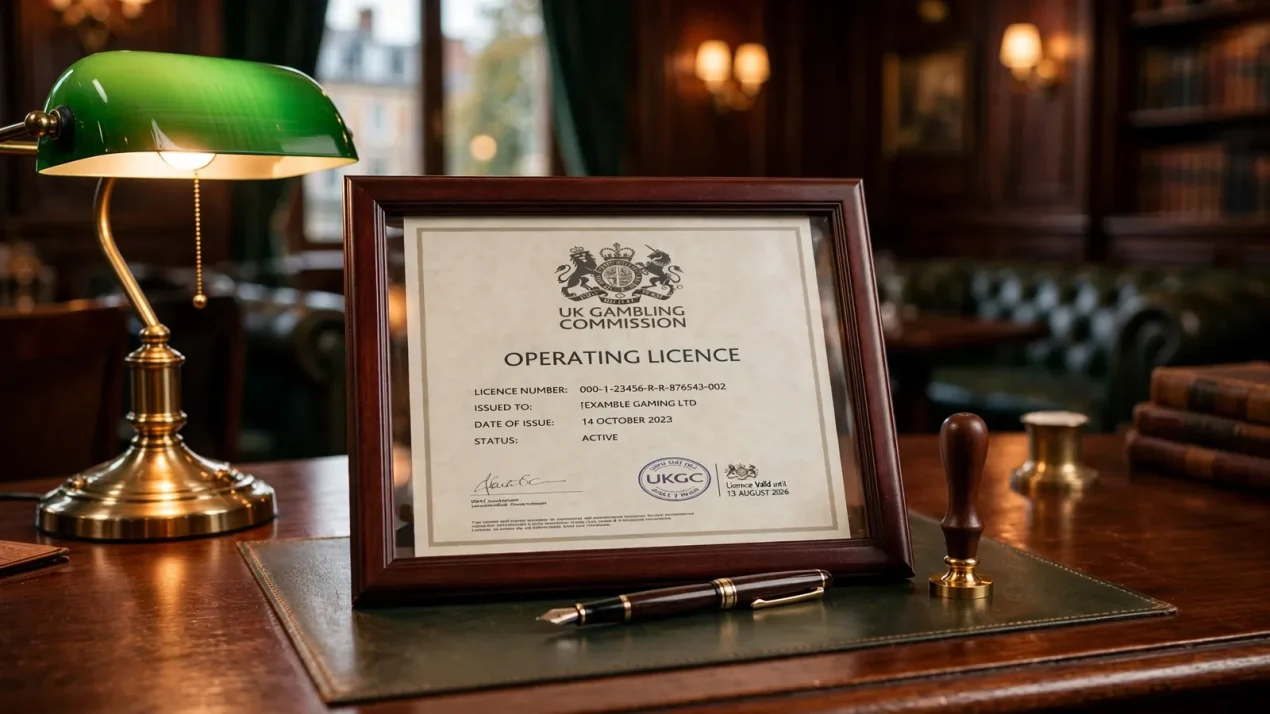
When I’m assessing an online casino for someone in Great Britain, I start with one basic question: does the operator hold the relevant UK Gambling Commission licence? It is not the only thing worth considering, and it does not tell you everything about how a particular site will treat you. But it is the first test because it establishes whether the business is authorised to offer remote gambling to customers here.
The UK Gambling Commission, often shortened to UKGC, regulates remote gambling offered to consumers in Great Britain. An operator taking real-money play from customers in England, Scotland or Wales must hold the relevant licence. That requirement applies whether the business is based locally or abroad. A company cannot avoid it simply by running its website from another country.
That point is easy to lose among polished branding, familiar casino games and claims about a site’s reputation. A website may look established, and its customer service may sound reassuring, but presentation is not authorisation. For a casino serving Great Britain, the relevant question is whether the operator has permission from the UKGC to provide that gambling service. If it does not, a professional-looking website does not fill the gap.
When you’re choosing an online casino in the UK, payout timing is one practical detail to check alongside the terms that matter to you. Use these brief notes as a starting point, not as a guarantee of overall trustworthiness.
1. SpinFormula
Payout speed: 1-3 business days
SpinFormula lists a payout speed of 1–3 business days. Check the operator’s terms to understand how that timing applies to your withdrawal.
2. Revery Play
Payout speed: 1-3 business days
Revery Play lists a payout speed of 1–3 business days. You can use this as one detail to consider when reviewing its withdrawal terms.
3. Zombillion
Payout speed: 1-3 business days
Zombillion lists a payout speed of 1–3 business days. Review its terms for any further details about withdrawals.
4. Jetsetspins
Payout speed: 1-3 business days
Jetsetspins lists a payout speed of 1–3 business days. Check its terms for more information before deciding whether that timing suits you.
5. Dieselwin
Payout speed: 1-3 business days
Dieselwin lists a payout speed of 1–3 business days. This is a useful withdrawal detail to consider, though it does not by itself establish overall trustworthiness.
6. NightLuck
Payout speed: 1-3 business days
NightLuck lists a payout speed of 1–3 business days. Check the operator’s terms for the details behind its stated withdrawal timing.
7. SlotoSport
Payout speed: 1-3 business days
SlotoSport lists a payout speed of 1–3 business days. Consider this alongside the withdrawal terms when assessing whether it meets your needs.
8. x3bet
Payout speed: 1-3 business days
x3bet lists a payout speed of 1–3 business days. You may want to review its terms for additional information about withdrawals.
9. BeOnBet
Payout speed: 1-3 business days
BeOnBet lists a payout speed of 1–3 business days. Treat this as one stated detail and check the operator’s terms for further context.
10. NightWin
Payout speed: 1-3 business days
NightWin lists a payout speed of 1–3 business days. Review its withdrawal terms to see how the stated timing applies to you.
What the licence is—and isn’t
A UKGC licence is a regulatory starting point, not a personal recommendation. It tells you that the operator falls within the Commission’s licensing regime for the activity it is offering. It does not mean that every game will suit you, every promotion will be worthwhile, or every interaction will feel effortless. Nor should the word “licensed” be treated as a promise that nothing can go wrong.
I find that distinction useful. People often ask for the most trustworthy online casino as if trust were a single quality you could settle with one badge. In practice, a licence answers a narrower but essential question: is this operator authorised to serve the market it is targeting? You can then judge other parts of the service on their own merits, rather than treating a friendly design or a generous-sounding offer as a substitute for regulation.
The licence is attached to the operator and the activity it is authorised to provide, not to a vague impression created by the brand. That matters because the name on a casino’s homepage may not, by itself, make clear which business is responsible for the gambling service. It is the operator that must meet the relevant licensing requirement. A brand name, logo or promotional message cannot stand in for that legal responsibility.
This is why I would not begin by asking whether a casino feels trustworthy. I would first establish whether it is operating within the UKGC framework for Great Britain. Only then does it make sense to weigh up the rest of the experience. It is a plain test, but plain is useful here.
Location doesn’t change the test
The rule is about who the operator serves, not simply where its office or website is located. A remote gambling business based overseas still needs the relevant UKGC licence if it offers facilities to consumers in Great Britain. The fact that its company is registered elsewhere does not remove that requirement.
Offshore casino sites: what UK players should check
That is worth keeping in mind when you come across a casino that describes itself as international or mentions a foreign base. Those details may explain where the business operates from, but they do not answer whether it is authorised to offer real-money gambling to customers here. For that, the UKGC requirement remains the relevant test.
In ordinary terms: serving this market brings the operator into the licensing picture. A different office address does not make the question disappear. No clever detour.
I also avoid treating the phrase “online casino” as enough to establish that a site is a legal choice for a player in Great Britain. The important distinction is not whether it offers casino-style games or whether people can open its pages. It is whether the operator has the licence required to offer the gambling service to consumers here. Availability and authorisation are different ideas; one does not prove the other.
A sensible first check
If you want a trustworthy casino online, begin with the UKGC requirement rather than a ranking, a brand’s own description or a claim that it is popular. That does not mean every licensed operator is identical. It means you have cleared a basic threshold before considering the finer details of the service.
Attention: A UKGC licence is a regulatory starting point and an authorization to operate; it is not a personal recommendation or a guarantee that every service will suit you.
I would put it this way: a UKGC licence is necessary for a remote operator serving customers in Great Britain, but it is not a complete verdict on the operator. It tells you where the business stands in relation to the regulator. It does not make your decision for you.
So keep the first question simple. Is the operator licensed by the UK Gambling Commission for the gambling service it offers to Great Britain? If the answer is unclear, do not let attractive wording or an overseas address distract you from that basic point. Start with authorisation; assess the rest separately.
Trust Signals You Can Check in the Public Register
A polished site can tell you what a casino wants you to think about it. A register entry gives you something more useful to test: whether the domain you are looking at is connected to a named operator and account. I treat that connection as a practical trust signal, not a verdict on every part of the service.
Start with the address bar. A familiar brand name is not enough; check the exact domain you intend to use. Then search the UK Gambling Commission’s public register for that domain and note the operator and account number shown. Search the operator’s name as well. The useful detail is whether the domain entry and operator entry point to the same account. A brand can be different from the legal company behind it, so matching those details is more informative than relying on a logo or a claim in a footer.
Merkur Casino Online UK: Brand, Games and Licensing · Anjouan Casino Licence in the UK: What It Means
A specialist casino review reports that the register lists leovegas.co.uk as an active UK-facing domain under operator account 39198. The Commission’s operator entry identifies that account as LeoVegas Gaming PLC. That gives you a concrete chain to look for: the consumer-facing domain, the operator’s legal name and a shared account number. If you check it yourself, make sure you are viewing the Commission’s register, rather than a review page repeating the details. Register information can change, so the live entry is the one to rely on.
The account number matters because it helps distinguish a specific licensed operator from a brand name that may be used in different contexts. When details line up, you have stronger evidence that the domain is associated with the operator named in the register. If they do not line up, pause rather than assuming the mismatch is harmless. Check the spelling of the domain and company name carefully; a similar-looking address is not the same address.
I also avoid treating a register match as a blanket endorsement. It establishes a useful link between an online brand and a listed operator, but it does not tell you whether every feature, promotion or customer interaction will suit you. Nor does the name recognition of a company replace checking the entry. “I’ve heard of them” is not the same as “I checked this domain.” Small distinction. Important one.
A sensible check is straightforward:
- Open the public register yourself, rather than following a link supplied only by the casino.
- Search the exact domain, including its ending, and compare the result with the operator’s entry.
- Record the legal operator name and account number shown, then see whether both entries agree.
- If a review or casino page gives different details, treat that as a reason to verify, not as proof that either version is right.
This approach is useful when several sites make similar claims about being trustworthy. You are not trying to decide which brand has the best design or the loudest welcome offer. You are checking whether the site in front of you can be tied to the operator it presents as responsible for it. That is a firmer starting point than testimonials, badges, or a confident “licensed” label with no clear company details.
The same habit applies if a site promotes a particular payment option or describes itself as an Ethereum casino. A payment method does not identify the operator, and a cryptocurrency label does not establish a connection to a UKGC account. Check the domain and operator relationship separately. I would not let a technology claim stand in for a register check.
Be precise about what you have established. If the domain and operator appear together under one account, say that is what the register shows; do not stretch it into a guarantee of safety or quality. If you cannot find a clear match, do not fill the gap with assumptions based on branding. Return to the exact address and the Commission’s own entry, and resolve the discrepancy before treating the site as verified.
Verify a Domain
Step 1: Check the address bar
Verify the exact domain you intend to use rather than relying on a brand name.
Step 2: Search the public register
Search the UK Gambling Commission’s public register for that specific domain.
Step 3: Match the operator
Note the operator name and account number and ensure the domain entry and operator entry point to the same account.
That is how I read trust claims: not as a promise that nothing can go wrong, but as a trail of details you can independently check. A recognisable name may get your attention. The domain-to-operator link is the evidence worth checking.
GAMSTOP, Self-Exclusion and the Limits of a Trust Claim
GAMSTOP is a self-exclusion service for people who want to restrict their access to online gambling. For customers in Great Britain, participation is not an optional mark of goodwill: remote operators within the Gambling Commission’s regime have been required to take part since 31 March 2020. That matters when you see a casino promoted as a trustworthy option because it is “not on GAMSTOP”. The phrase is not evidence of stronger service or a useful alternative protection standard.
A Great Britain-regulated online operator cannot choose to sit outside GAMSTOP while continuing to offer remote gambling under that regime. So if a site presents its absence from the scheme as a selling point, treat that as a reason to pause, not as a trust signal. The claim may describe a business outside the regulated system, rather than a regulated operator offering a different kind of protection. A reassuring design or confident wording does not change what the claim means.
That distinction is important if you are comparing casinos. “Non-GAMSTOP” is not a separate quality rating, nor does it tell you that a site has assessed your circumstances and decided gambling is safe for you. It can instead appeal to people trying to get around a decision to self-exclude. I would not read that as customer care. It points in the other direction.
What self-exclusion is for
Self-exclusion is a protective step, not a general certificate of good conduct for a casino. It is intended to help you block access to participating gambling services when you have decided you need a break or want to stop. It does not, by itself, guarantee that every part of a gambling service is fair, easy to use or suitable for you. Those are different questions.
Non-GAMSTOP Claims
If a site promotes its absence from GAMSTOP as a selling point, it may be operating outside the regulated system rather than offering a different protection standard.
Nor should the presence of GAMSTOP be treated as a reason to ignore your own warning signs. A scheme can support a decision, but it cannot make that decision for you or remove every temptation to gamble elsewhere. If you have self-excluded, trying to find a site that will let you continue is not a harmless technical workaround. It cuts across the protection you chose.
If you are considering self-exclusion because gambling is causing harm, take the decision seriously and give yourself support beyond a website setting. The National Gambling Helpline is available around the clock on 0808 8020 133. You can contact it for help without needing to prove that things have reached a particular point. The important part is reaching out before the situation gets harder to manage.
Read the claim, not just the badge
When a casino mentions GAMSTOP, separate two questions: whether it falls within the Great Britain regime that requires participation, and whether self-exclusion is the right protection for you. The first is about the operator’s relationship with the scheme. The second is personal. Neither question is answered by a marketing line calling a casino trustworthy.
If you are already registered with GAMSTOP, do not treat a site’s claim that it is outside the scheme as reassurance that playing there is safe. It may mean the site is not part of the protections you expected. If you have not self-excluded, the same claim still deserves caution: an operator presenting the absence of a harm-prevention measure as a benefit is giving you a clear signal about its priorities.
GAMSTOP is one part of a safer-gambling framework, not a guarantee about every interaction you will have with an operator. But for regulated remote gambling in Great Britain, participation is required. That is the key point to keep in mind when a casino tries to make being outside the scheme sound like a perk. It isn’t one.
Casino Without a Swedish Licence: UK Player Guide · Curacao Casino Licence in the UK: What It Means
Real-Money Play: Check the Terms Before You Deposit
A real-money offer can look generous until you work out what its conditions ask you to do. I’d read the bonus terms before paying in, not after a balance has been split between cash and bonus funds. The useful question is not just how much is offered, but what you must stake, which games count and when the offer expires.
A specialist review illustrates the arithmetic with a £20 bonus carrying 10x wagering: the required total stakes come to £200. That figure is an example from the review, not a standard condition for every casino. Check the offer in front of you and see whether wagering applies to the bonus, your deposit, or both. Those are different calculations, and a headline amount does not settle which one applies.
Then look at the contribution table. The same specialist review describes slots as counting their full stake towards wagering, while live tables and blackjack may count at a lower rate or not count at all. If a game contributes less, you may need to stake more overall to meet the same requirement; if it contributes nothing, playing it will not move that requirement forward. A game’s presence in the lobby does not mean it qualifies for the bonus.
Read the small print.
Eligibility can matter just as much as the wagering figure. The review says welcome deals are commonly restricted to new customers, limited to one per household and sometimes unavailable when you use particular payment methods, including e-wallets. Treat those as conditions to verify against the specific offer, rather than rules that apply identically everywhere. If you have claimed a promotion before, or someone in your household has, check the wording before you assume you qualify.
Do
- Read the bonus terms before depositing
- Check the game contribution table
- Verify eligibility for the specific offer
- Note the bonus expiry date
Don’t
- Rely on a headline bonus amount
- Assume all games count toward wagering
- Use excluded payment methods for bonuses
- Assume a bonus is valid indefinitely
Payment restrictions deserve a close look. A method can be available for ordinary deposits but excluded from a promotion; the terms may also say that using it makes you ineligible rather than simply changing the bonus amount. Check the qualifying methods and any opt-in step before depositing. Once you have paid in, discovering that your chosen method did not qualify is a poor way to learn the rules.
Expiry is another practical detail that is easy to miss. A specialist review reports that bonus funds and free spins commonly have a set validity period ranging from 7 to 30 days. The actual end point should be stated in the promotion’s terms. Check whether the clock starts when you accept the offer, receive the bonus or make a qualifying deposit, and whether unused funds or spins disappear when it runs out. Do not assume the deadline applies only to starting play; the terms determine what must be completed by then.
I also separate bonus money from withdrawable cash when comparing offers. The terms should explain when bonus funds become available to withdraw and what happens if you cancel or decline the promotion. If that explanation is hard to find, pause and get clarity before accepting. A trustworthy real-money online casino should make the offer conditions readable enough for you to understand what you are agreeing to, not rely on a bright banner to do the explaining.
My own rule is plain: add up the stakes, check which games count, confirm that you qualify and note the expiry. If any of those conditions changes the value of the deal for you, decide before you deposit. A larger headline bonus is not necessarily the better offer.
Trusted casinos not on GamStop UK: how to assess them · USA Casinos for UK Players: Rules and Risks
Online Slots Come with Firm Limits
Slot rules are more than small print beside the spin button. In Britain, the maximum stake depends on your age: a specialist review of the rules reports a cap of £5 per spin for players aged 25 and over, and £2 for those aged 18 to 24. The lower limit applies until your twenty-fifth birthday. It is a ceiling, not a target; you can choose a smaller stake.
That age split matters when you compare trustworthy online slots. A game may look identical across two accounts, but the permitted stake is not the same for every adult player. Check the amount shown before you play, especially if you are used to a different limit. If the game will not accept a stake above your applicable cap, that is a restriction to respect, not a glitch to work around.
The rules also shape the pace of play. A slot spin must take at least two and a half seconds in Britain, so a game cannot simply race through rounds faster than that. Autoplay is banned, too: you have to start each spin yourself rather than set a sequence running in the background. These requirements apply to online slots, not every casino game.
That can make a session feel less automatic, which is the point. When you press the button yourself, you have a chance to pause between spins and notice how quickly you are spending. A slower spin does not make a game safer by itself, and the stake cap does not prevent losses. Neither is a reason to treat a slot as a way to make money. Keep the practical distinction clear: the law limits the size and pace of play, but it does not promise a particular result.
UK Slot Limits
In Britain, the maximum stake is capped at £5 per spin for players aged 25 and over, and £2 for those aged 18 to 24.
If a game offers a choice of stake, look at the actual amount selected before each spin. A small display can be easy to miss when you are moving quickly between games. If the available stake seems inconsistent with your age, stop and check rather than trying to get around the limit. The same applies if a game appears to run spins automatically or move faster than the required interval: do not assume that a familiar design means the feature is permitted.
For me, these are useful basics to check before playing, not evidence that every part of a casino is trustworthy. The limits are firm. A flashy interface does not change them.
Withdrawals: What Processing Times Can and Can’t Tell You
A cash-out estimate is useful, but it is not a promise that money will reach your account at that moment. There are at least two stages to keep separate: the casino’s review and release of the withdrawal, then the payment provider or bank processing it. A delay at either end can change what you experience.
A specialist review reports that a first withdrawal can involve an extra 12–24 hours for document checks. Treat that as a reported possibility, not a fixed rule for every operator. If a payment takes longer than you expected, check whether it is still being reviewed or has been sent out. Those are different hold-ups, and the payment status should help you work out which one you are dealing with.
Non-UK Licence Casinos: What the Licence Means
The same specialist review gives different estimates by payment method. It puts PayPal withdrawals at roughly 4–6 hours on weekdays, with the window extending to 8–10 hours from Friday to Sunday. Debit card withdrawals are reported as taking 2–3 banking days after the operator has reviewed them. The distinction matters: a banking-day estimate is not the same as a clock running continuously through a weekend.
These timings are a point of comparison, not a way to rank casinos as trustworthy. A quick payment does not, by itself, show how an operator handles other parts of an account; a slower one does not explain the reason for the delay. I look at the stated processing stage and method before comparing a quoted time with the eventual arrival.
Bank transfer can bring a separate cost. A specialist review reports possible charges of £2–£5, depending on the customer’s bank policy. Check the terms for the route you plan to use, and check with your bank too. A fee described as modest still comes out of the money you receive.
Payment options also need to be checked individually. Deposit and withdrawal availability are separate, so seeing a method on the cashier’s deposit screen does not establish that you can use it to cash out. That matters if you are comparing a trustworthy Bitcoin casino: the timings above concern PayPal, debit cards and bank transfers, and do not confirm Bitcoin support or its processing time. Don’t fill that gap with an assumption.
I would use published processing estimates to set expectations, then compare them with the status shown for the actual withdrawal. Keep the difference between review time and transfer time in mind, especially for a first cash-out or a payment made near the weekend. Clear distinctions. Less guesswork.
Withdrawal processing times
- PayPal: Roughly 4–6 hours on weekdays; 8–10 hours from Friday to Sunday.
- Debit cards: 2–3 banking days after the operator review.
- First withdrawals: May require an additional 12–24 hours for document checks.
A Trustworthy Choice Still Needs Account-Level Controls
A trustworthy choice is not only about what happens when you sign up. It should also give you practical ways to keep your spending within limits after you have started playing. In Britain, remote operators must prompt new customers to set a financial limit before their first deposit and make account-level limit controls accessible.
I would check these controls before treating a polished site or a reassuring claim as enough. Can you find the limit settings in your account? Can you lower a limit without having to negotiate with customer support? Those are useful checks because your circumstances can change, and a safeguard is only useful if you can act on it.
The timing matters. A reduction to a limit takes effect immediately. An increase is different: it is subject to the standard cooling-off delay. That distinction gives a lower limit prompt force while preventing an increase from becoming active straight away. If you are reviewing your budget, do not assume that raising a limit will work instantly.
These controls are not a promise that you will never spend more than planned, and they do not make a casino trustworthy in every other respect. They are one practical part of managing an account. I find it sensible to set a limit you can live with before depositing, then leave it in place unless your circumstances genuinely call for a change. No guesswork needed.
If a limit is hard to locate, or the account gives you no clear way to manage it, pause before depositing. A sound choice should let you see the controls and understand what happens when you change them. That small check is more useful than relying on a broad label such as “trusted”.
Offshore Casinos for UK Players: Key Risks
Casino Reviews Should Include the Regulator’s Record
A polished casino brand tells you how it wants to be seen. It does not tell you everything about the company behind it. When I read a review, I look for whether it identifies the operator and considers the regulator’s published record, not just the games, offers and website design.
That matters because enforcement action can expose problems that a promotional description leaves out. It is not, by itself, proof that every customer has had a bad experience, nor does it settle whether an operator is trustworthy today. But a review that ignores a relevant public finding gives you an incomplete picture.
Grace Media offers a concrete example. The UK Gambling Commission’s public register links 333casino.com to Grace Media (Gibraltar) Limited, under account 57869, as a White Label domain. A specialist review also describes that connection; because brand arrangements can change, treat the register as the point to check rather than assuming the relationship remains unchanged.
Separately, on 26 June 2025, the Commission imposed a £60,000 financial penalty on Grace Media. The breaches involved self-exclusion and consent for direct electronic marketing. That is a specific regulatory finding, not a general verdict on every casino associated with the company. Still, it belongs in a review discussing the operator’s record.
The distinction between a brand and its operator is easy to miss. A review may focus on the name displayed to customers, while enforcement notices identify the company responsible. I’d check both before relying on a glowing verdict: who operates the site, and whether the regulator has published action involving that company.
Reviewing Operators
A trustworthy review should identify the legal operator and consider the regulator’s published enforcement record, not just the brand’s presentation.
Then read the detail, not only the headline. The subject of the action, the date and the named business all matter. A review that links those points helps you judge what the record says—and what it does not. A badge or a confident score cannot do that work for you.
That is the useful standard for trustworthy casino reviews: explain the evidence, name the operator and put any regulatory action in context. Not a clean bill of health. A clearer picture.
Does “UK Casino” Mean the Same Thing Everywhere?
“UK casino” sounds like one clear category, but the regulatory map has a boundary that matters: the Gambling Commission’s remit under the Gambling Act 2005 covers England, Scotland and Wales, not Northern Ireland in the same way.
That distinction changes how you should read a claim that an online casino is “UK regulated”. A UKGC Licence relates to the Commission’s regime for remote gambling offered to consumers in Great Britain. Northern Ireland is outside that remit for remote-gambling provision. So a UKGC status should not be treated as a complete answer about the rules applying in Northern Ireland.
Non-UKGC Licensed Casinos: Rules and Risks
I’d be careful with broad labels on a website or in a review. “Available in the UK” can blur the difference between the jurisdictions, while “licensed in Great Britain” is more precise about what the claim means. The name of a brand, its British-facing design or a familiar payment option does not resolve which regulator’s jurisdiction applies to a player.
This is not a reason to assume that every site accepting a Northern Ireland customer is trustworthy, or that a Great Britain licence tells you nothing useful. It tells you something specific: the operator is within the Gambling Commission’s regulatory framework for Great Britain. It does not, by itself, establish that the same framework governs Northern Ireland.
If you live in Northern Ireland, read licensing statements with that boundary in mind and look for wording that identifies the regulator and the territory covered. If you are in England, Scotland or Wales, the Commission’s remit is the relevant one for remote gambling offered to consumers there. Small wording difference. Important one.
Non-Gamban casinos in the UK: what the label means
A trustworthy choice depends on understanding what a regulatory claim actually covers, not just spotting the word “UK”. The country label is convenient; the jurisdiction is the detail that counts.
Before You Sign Up, Be Ready to Prove Who You Are
Finding a trustworthy online casino is not just a matter of checking what a site says about itself. Before you can deposit or play with a UK-regulated operator, you must complete verification. It is part of opening an account, so be ready for it before you start rather than treating it as an unexpected obstacle later.
The documents commonly requested are a photo of your passport or driving licence and a recent utility bill. The first establishes your identity; the bill can help confirm your address. Have them to hand and make sure the details are readable. If you cannot provide the requested documents, you may not be able to finish setting up the account or begin playing.
Non-GamStop European Casinos: What UK Exclusion Means
I would check that the name and address you enter during registration match the information on your documents. A mismatch can turn a straightforward check into a delay, even when it is only a small difference in how a detail has been entered. Take a moment to review your registration information before submitting it.
You should also expect the operator to explain how to send the documents and what it needs from you. Follow those instructions rather than sending personal information through an unofficial channel. If anything is unclear, use the contact route shown on the operator’s own site and ask before sharing files. A professional-looking page is not a substitute for a clear account-opening process.
This check is separate from deciding whether an offer suits you or whether a brand’s public claims look convincing. It is the practical step that confirms you can use the account. If you are not ready to provide identification and proof of address, wait until you are. No need to rush.
Related posts

Top-Rated Online Casinos in the UK: Amatic Guide

Wazdan Casinos in the UK: Check Game Availability