
Casinos That Accept Debit Cards in the UK
 Available in GB
Content
Learn how card deposits work, which details to check in the cashier, and what to expect when withdrawing winnings.
Using a Debit Card at an Online Casino
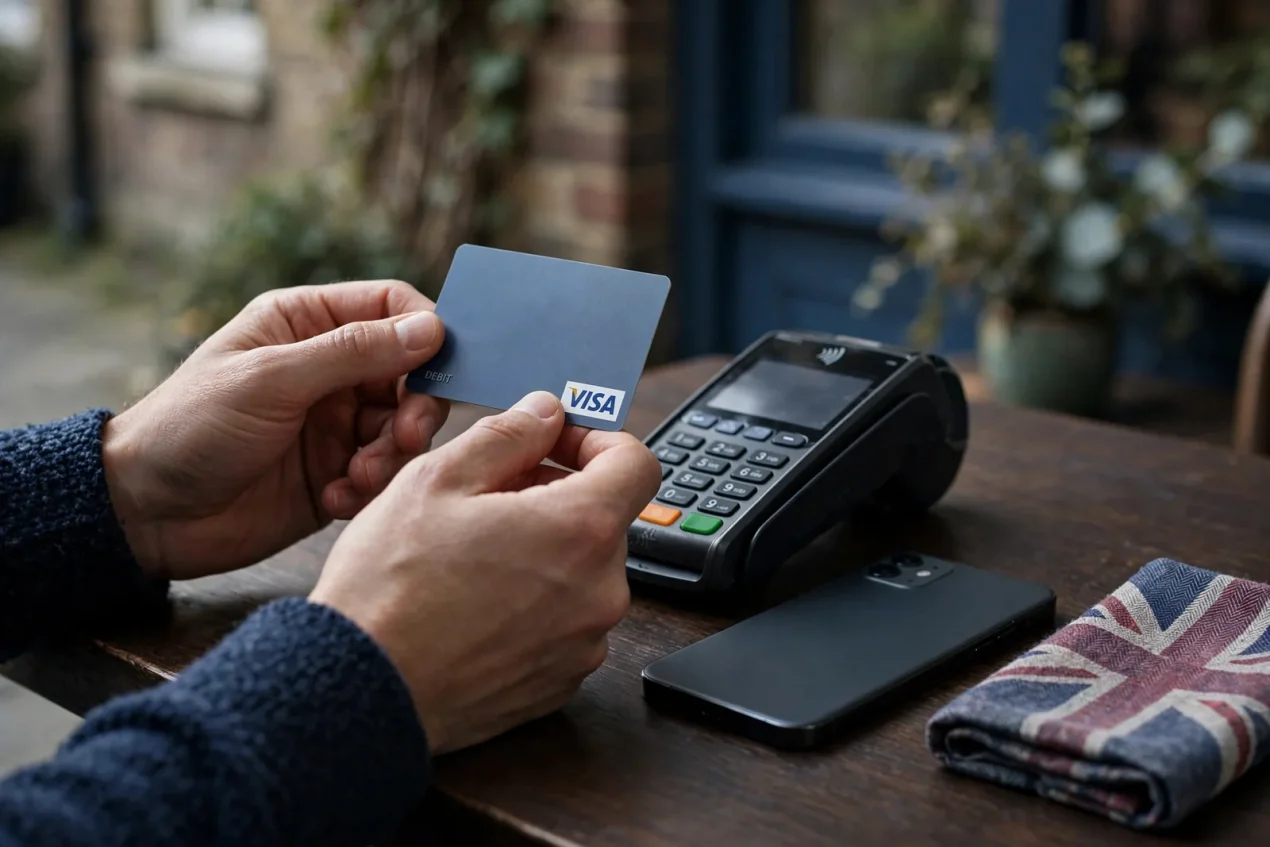
A debit card is a way to move money from your bank account into an online casino account. UK casinos commonly accept debit cards, including Visa and Mastercard, so the option is familiar to many players. It is still a payment route rather than a separate kind of casino account: you choose it in the cashier, enter the requested card details and confirm the transaction through the steps shown by the casino and your bank.
The distinction between debit and credit matters in the UK. A debit-card payment draws on money held in your bank account; a credit-card payment uses borrowing. Credit-card gambling was banned on 14 April 2020, and that ban has not been relaxed. A credit card is therefore not an alternative to a debit card for funding gambling at a UK-licensed casino.
That also rules out trying to make a credit card acceptable by routing the money through another service. Remote gambling operators cannot accept credit-card payments for gambling, including credit-card funding routed through a money service business. Nor can they accept wallet payments where the wallet allows credit-card funds to be used for gambling. The route may look different on a screen, but the underlying source of the funds still matters.
When choosing a UK casino that accepts debit cards, you should check that its payment options suit you as well as how withdrawals are handled. The payout information below gives you one detail to consider for each operator.
1. SpinFormula
Payout speed: 1-3 business days
SpinFormula lists a payout speed of 1–3 business days. Check whether its available payment methods meet your needs.
2. Revery Play
Payout speed: 1-3 business days
Revery Play lists a payout speed of 1–3 business days. You can use this as one factor when considering its payment arrangements.
3. Zombillion
Payout speed: 1-3 business days
Zombillion lists a payout speed of 1–3 business days. Check its payment options directly to see whether they suit you.
4. Jetsetspins
Payout speed: 1-3 business days
Jetsetspins lists a payout speed of 1–3 business days. This gives you a stated timeframe to consider for withdrawals.
5. Dieselwin
Payout speed: 1-3 business days
Dieselwin lists a payout speed of 1–3 business days. Confirm its available payment methods before deciding if it fits your needs.
6. NightLuck
Payout speed: 1-3 business days
NightLuck lists a payout speed of 1–3 business days. You may want to check its payment options when assessing it for debit-card use.
7. SlotoSport
Payout speed: 1-3 business days
SlotoSport lists a payout speed of 1–3 business days. Check directly whether its payment arrangements work for you.
8. x3bet
Payout speed: 1-3 business days
x3bet lists a payout speed of 1–3 business days. Its available payment methods are worth checking against your preferences.
9. BeOnBet
Payout speed: 1-3 business days
BeOnBet lists a payout speed of 1–3 business days. Confirm its payment options directly to see whether they suit you.
10. NightWin
Payout speed: 1-3 business days
NightWin lists a payout speed of 1–3 business days. Check its payment arrangements to determine whether they meet your needs.
A debit card can feel straightforward because it connects the casino payment to an account you already use. You do not need to treat it as a special casino product. The important first distinction is simply whether the card payment is debit or credit. If you are unsure, check the card or ask your bank rather than assuming that every card with a familiar logo is a debit card. The logo identifies a payment network, not necessarily the type of card or whether a specific product will be accepted.
When a casino offers a debit-card option, the payment is part of its wider cashier system. The casino displays the available method, and your bank may ask you to confirm the transaction. A successful payment depends on the relevant checks being completed; seeing a card option does not itself mean every payment will be approved. That is normal for online payments, not a reason to treat a failed attempt as permission to switch to a credit card. The credit-card restriction remains in place.
I would keep the basic categories separate when reading a cashier. A debit card is not the same thing as a bank transfer, an e-wallet or a prepaid voucher, even if each can be used to put money into a gambling account. Nor does the fact that a casino accepts Visa or Mastercard mean that every Visa or Mastercard product is eligible. The network name is only one part of the picture; the casino’s own payment screen is where you see what it offers for your account.
Casinos That Accept Diners Club in the UK: Payment Rules · Casinos That Accept Maestro in the UK: Payment Guide
There is a further distinction between a legal casino and a payment method. In Great Britain, remote gambling operators serving customers must hold the relevant UK Gambling Commission licence. A familiar card logo does not tell you whether the casino is licensed, just as a UKGC licence does not guarantee that a particular card will work. Check the operator’s status separately, and use the cashier to establish whether card payment is available before you try to pay.
Debit cards are often considered alongside other payment routes, but you do not need to choose a method just because it appears on a list. What matters at this stage is understanding the role of the card: it is a payment instrument connected to your bank account, and it is distinct from borrowing on a credit card. If a payment route involves a wallet or intermediary, the credit-card gambling restrictions still apply to the source of the funds. No workaround.
The phrase “casino that accepts debit cards” can make acceptance sound universal, as though one card decision settles everything. It does not. UK casinos commonly accept debit cards, but availability can differ between operators and card products. Treat the card option as one part of the casino’s payment setup, not as proof that every transaction will go through or that all cards work in the same way.
For a first pass, keep it simple: identify whether you have a debit card, distinguish it from a credit card, and look for the payment option shown by the casino. Do not use credit-card funds for gambling through a different route. That is the central point behind the UK restriction, and it has not changed since the ban took effect.
Credit Card Ban
Credit-card gambling is banned at UK-licensed casinos. This restriction includes routing credit funds through other services or wallets.
What to Look for When Comparing Debit-Card Casinos
A casino can display a debit-card option and still be a poor fit for the way you want to manage payments. I would compare the whole route, from the details used to open the account to the account you expect to use for transactions later. That is more useful than treating a card logo as a verdict.
Match the account to the payment route
Start with the basics: the casino account and the debit card should belong to you, and the details you provide should be consistent. When the customer information and payment route point to the same person, there is less chance that a simple ownership mismatch will hold up a transaction or prompt extra questions.
The cleanest arrangement is often one named account used consistently for both depositing and withdrawing. Switching between cards, accounts or other payment routes can make the picture harder to follow. It may also mean that a casino needs to establish who owns each one before it can complete a transaction. Keep it straightforward.
This is not a reason to assume that every casino handles every payment in the same way. Read the payment terms for the site you are considering and check what it says about using the original source again. If you already know you would prefer to use one particular card, compare sites by whether that route fits their stated process, rather than by a general claim that they accept cards.
Wirecard at UK casinos: check payment availability · Casinos That Accept Dogecoin in the UK: What to Check
Look beyond the word “accepted”
“Debit cards accepted” is a starting point, not a full description of your experience. The wording does not tell you whether the route will work with your particular card product or account, nor whether the same route can be used throughout your casino account. Those details can vary, so treat the operator’s payment information as something to confirm, not a blanket promise.
For a fair comparison, ask the same questions of every site you are considering. Is the card route available for the account you intend to open? Does the casino explain how it handles a payment if the first attempt does not go through? Are the terms clear about keeping account and payment details aligned? If the answers are hard to find, that is a practical drawback in itself.
You do not need to build a grand scoring system. A short note beside each option is enough: “clear process”, “unclear ownership rules” or “need to confirm”. It keeps a debit-card casino comparison grounded in details that matter to you, rather than polished claims that could fit any site.
Judge how clearly the operator explains its process
Clarity is useful before you make any payment. A site should make it possible to understand which payment route is available and what it expects from you if account information needs checking. If the terms are scattered or vague, you may have to contact support before you can make a confident choice.
Pay attention to whether the answer you get is specific to your question. A general reassurance that cards are supported does not settle whether your own account details and payment route will fit the operator’s process. If you contact customer support, keep the question narrow and compare the substance of the replies, not just how quickly they arrive.
Do
- Match the casino account name to the debit card owner
- Use a single named account for both deposits and withdrawals
- Read the site’s specific payment terms
Don’t
- Switch between different cards or payment routes
- Assume a card logo is a guarantee of acceptance
- Rely on general claims instead of specific process details
I would also look at whether the site makes its operating status easy to establish. Remote gambling licensees serving the British market must hold the relevant UK Gambling Commission licence. You can verify a licence on the Commission’s public register before depositing. It is a basic check, not a substitute for comparing payment arrangements, but it belongs in the decision.
Compare for your own routine, not someone else’s ranking
The best debit-card casino site for you is the one whose payment process fits your account and remains clear when you need to use it. A name appearing in a comparison or a broad statement about card acceptance cannot tell you whether your own details will line up with the operator’s requirements.
Before choosing, consider how you plan to keep your account information and payment route consistent. If you expect to use one personal card, favour a clearly explained process built around that arrangement. If you might change routes, find out how the casino treats that change rather than assuming it will be seamless.
I would keep the decision modest: confirm the operator’s status, read its payment terms, and make sure you understand how your chosen route relates to your casino account. Then compare only the options that meet those practical requirements. No ranking can do that part for you.
Making a Debit-Card Deposit: Limits and Currency
Before you deposit by debit card, check three things in the account: the minimum the casino will accept, the maximum allowed for your payment route, and the currency your balance will use. They are easy to overlook when you are focused on the amount you want to play with. A payment can be declined simply because it falls outside the cashier’s stated limits.
UK Casino Credit Card Payments Explained · Casinos That Accept EntroPay in the UK
A specialist review puts the minimum deposit at £10–£20, with the exact entry point depending on the selected payment method. Treat that as a guide, not a promise about every casino or every card. The amount shown in the cashier for your account is the practical figure to follow. If you are depositing less than the displayed minimum, the transaction may not go through; if the minimum feels higher than you intended to spend, do not raise your deposit just to meet it.
The minimum is only one side of the limit. A maximum may apply to a single deposit, to your total deposits over a day, or to deposits over a month. These caps can differ by payment method and account status, so do not assume a card has the same ceiling as another route. Nor is a maximum necessarily a target. It is simply the upper boundary the casino or payment route allows, and your own budget may call for a much smaller amount.
I check the cashier’s figures immediately before entering a payment, rather than relying on a note saved from an earlier visit. The displayed limit is the one relevant to the current account and selected route. If the amount you intend to deposit is above the stated maximum, split it only if the casino’s rules and your own financial limit permit that; do not treat repeated deposits as a way around a restriction.
Currency deserves the same attention. GBP is reported as supported on the reviewed pages, but that does not establish that every account is set to pounds automatically. Confirm the account currency before your first transaction. If your balance is set to another currency, the amount shown after depositing may not match the amount you expected in pounds. Check the currency setting first, before you enter the card details.
Pre-Deposit Checks
- Confirm the account is ready to accept deposits
- Check the cashier’s minimum and maximum deposit limits
- Verify the account currency is set to GBP
- Set a personal financial limit based on what you can afford to lose
- Ensure age verification is completed
The distinction is straightforward: the payment method moves money into the account, while the account currency determines how the balance is displayed and handled. A pound-denominated card does not, by itself, prove that the casino account is also denominated in pounds. Look for the currency in the account or cashier settings and make sure it is clear before confirming a deposit. Better to pause than discover the mismatch after the payment.
UK rules also put a limit-setting step before the first deposit. Remote gambling licensees must prompt new customers to set a financial limit before they deposit, and account-level limit controls must remain accessible. That is separate from the cashier’s minimum and maximum: the payment limit describes what the route or casino will accept, while your own financial limit helps keep your spending within the boundary you chose.
Set that personal limit around what you can afford to lose, not around the largest deposit the cashier permits. If the limit you set is lower than the amount you are trying to deposit, follow the limit rather than looking for another route to fund the same play. A payment method is not a budgeting tool. The useful check is whether the amount fits both the casino’s stated rules and the boundary you set for yourself.
Age checks matter at this point too. Operators must verify a customer’s age before allowing a deposit into a gambling account, so be prepared for the account process to require confirmation before funds can be added. Do not keep retrying a payment if the account is waiting for an age check or another account step to be completed; resolve that first.
Casinos That Accept Bitcoin in the UK: What to Check · Casinos That Accept Ethereum in the UK: What to Check
A simple pre-deposit routine avoids most confusion: confirm the account is ready to accept deposits, read the card route’s minimum and applicable maximum, check the account currency, then enter an amount that fits your own financial limit. The cashier’s information is specific to the account and route you are using, so give it the final say. Small checks, fewer surprises.
Which Debit Cards Can You Use?
Visa and Mastercard are the debit-card networks you are most likely to see listed by UK casinos. That gives you a useful starting point, but a logo is not a promise that every card carrying it will work. The network and the specific card product are separate parts of the check.
A specialist review of casino payment pages lists Visa and Mastercard among the available methods, but payment pages can change. It does not establish that every casino currently offers both networks to UK customers, or that every card product on either network is eligible. Check the cashier for the casino you intend to use, rather than relying on a general payment-method list.
The distinction matters if your card has features beyond ordinary debit payments. A network logo tells you which payment network it uses; it does not, by itself, tell you how the casino classifies or supports that particular product. If the cashier names a network but does not make the product eligibility clear, the casino’s payment terms or support team can clarify before you try to pay.
A network logo (like Visa or Mastercard) identifies the payment network, not necessarily the specific card product or whether that product is eligible at a particular casino.
I would check the exact card you plan to use, not just the brand printed on it. Make sure the cashier lists the network for UK customers and that the casino’s terms do not exclude your card type. If you have more than one card, do not assume that acceptance of one means acceptance of the other—even when both show the same logo.
This is especially worth doing before you build your plans around a particular route. A casino may display Visa or Mastercard as an option while the payment choice shown to you depends on the account or the current cashier. The practical answer is the option available in your own account, not a logo on a page you saw elsewhere.
When you check, look for the method label in the cashier and read any notes attached to it. If the listed option is unclear, ask the casino whether your specific debit-card product is supported for UK customers. That small check is more useful than treating network acceptance as blanket approval.
There is no need to guess from the card’s appearance. Visa and Mastercard are commonly accepted at UK casinos, but that broad pattern cannot confirm a particular product at a particular site. Check the current cashier and the card terms, then use the route the casino actually makes available to you. Logo spotted; compatibility still to confirm.
Getting Casino Winnings Back to Your Debit Card
A debit-card deposit and a debit-card payout are not mirror images. You may see a deposit reach your casino balance instantly, yet wait several business days for a withdrawal to arrive. A specialist review describes that difference in timing; it is not a promise that every casino or card issuer will handle a payout in the same way.
Casinos That Accept Instadebit in the UK
The first step is often the casino’s own approval, before the money even begins its journey back through the payment system. The casino may need to review the withdrawal and confirm that your account is fully verified. A specialist review notes that this internal process, and any outstanding verification, can affect how long a withdrawal takes. A first payout can take longer if the casino still needs to complete KYC checks. That is the part people tend to overlook.
Why the original card matters
For a casino withdrawal to a debit card, expect the operator to look at where you deposited from. UK anti-money laundering rules generally require payouts to return to the original payment source. This is often called a closed-loop approach: winnings are sent back through the route used to fund the account, rather than redirected wherever a player prefers.
So if you deposited by card, the cashier may show that same card as the withdrawal route. The payment may be processed back to the card account even if the card itself is no longer in your hand; if anything about the card or account has changed, contact the casino before submitting the request. Do not assume you can select a different method just because it is displayed as an option.
The original-source rule is not simply a quirk of card payments. It is part of how operators handle funds and meet anti-money laundering requirements. If the casino cannot return a payout through the original route, it may ask for further checks or instructions. That can add steps, so it is worth understanding the cashier’s process before you request a withdrawal.
Attention: UK anti-money laundering rules generally require winnings to be returned to the original payment source, meaning funds deposited by debit card must be withdrawn to the same card.
What affects the wait
There are several stages: the casino reviews the request, releases the funds, and the payment then passes through the relevant payment channels. A delay can occur at the casino stage, while verification is being completed, or after the payment has been sent. A “processed” status may therefore mean the operator has approved the payout, not that the money is already visible in your bank account.
When you check a casino’s withdrawal information, look for separate wording on approval and delivery. Note whether it gives a card-specific estimate, what it says about pending requests, and whether verification must be complete before a payout is processed. If the stated window passes, ask support for the current status and whether the funds have left the casino.
For an online casino debit-card fast withdrawal, the useful question is not simply whether the site advertises fast payments. Ask how long its own approval can take and what happens when KYC is still outstanding. I would treat the cashier’s stated process as more useful than a broad speed label. A card deposit can be quick; getting winnings back involves more than the card alone.
The Costs Behind a Debit-Card Payment
The amount you enter at a UK debit-card casino is not always the whole cost of the transaction. A specialist payment review identifies several possible charges: the casino’s own fee, a payment-provider charge, a fee from your card issuer or bank, and costs linked to currency conversion or the card network. Which ones apply depends on the route and the terms of the businesses handling the payment.
Casinos That Accept iDEAL in the UK: Payment Guide
Start with the casino’s cashier and payment terms. Check whether the operator charges for a card transaction, and whether any fee applies to deposits, withdrawals or both. A casino may not charge directly, but that does not settle the question: your bank or card issuer may apply its own terms, while a payment provider may add a separate charge. Read the wording carefully, rather than assuming that “no casino fee” means the payment is free.
Currency conversion is another place where the total can be less obvious. If a transaction is converted, compare the exchange rate used with any separately displayed fee. A specialist payment review notes that the conversion spread—the difference between the rate applied and a reference rate—can cost more than a visible flat charge. A small-looking fee is not the whole picture if the rate itself is less favourable.
The currency setting matters here, but this is about cost rather than deposit limits. If your casino account and the payment route use different currencies, conversion may occur somewhere along the way. The casino, provider, card network or bank may be involved, depending on how the transaction is processed. Check which party sets the rate and whether the cashier shows the amount you will be charged before you confirm.
Network-related costs can also form part of the overall payment, although you may not see them as a separate line on your casino statement. Look at the final amount taken from your bank account, not just the figure shown in the cashier. If the two differ, check your card statement and the relevant provider terms to identify where the difference arose.
There is no single cheapest payment method for every player or every transaction. Compare the casino charge, provider fee, bank or issuer cost, exchange-rate spread and any network cost for the amount you actually plan to pay. A method that looks free at the cashier may still involve a conversion cost; another may show a fee upfront but avoid that exchange. Compare like with like.
Potential Debit Card Costs
- Casino Fees: Direct charges for deposits or withdrawals.
- Provider/Bank Fees: Charges applied by the payment provider or your card issuer.
- Currency Conversion: Costs arising from the exchange rate spread when different currencies are used.
- Network Costs: Fees linked to the card network.
I would not choose a route on its headline fee alone. Check the complete cost before confirming the transaction, and keep the receipt or transaction record in case you need to query a charge. A little checking now beats an unexplained deduction later.
Deposit Offers and Other Payment Routes
A casino that accepts debit cards may still give you a choice of other ways to fund your account. That flexibility matters when an offer is attached to a particular payment method: the deposit route you choose can affect whether the promotion is available to you.
PayPal is valued for speed and convenience, but a specialist casino review reports that some offers exclude deposits made through it. Skrill and Neteller are offered at some sites, and specialist reviews also report that promotions often exclude them. Treat those points as reasons to read the terms, not as a rule that applies to every casino. The cashier and the offer conditions are what matter for the site you are considering.
Check the payment-method wording before you opt in or make a deposit. An offer may distinguish between eligible methods, and the fact that a card appears in the cashier does not mean every promotion accepts a card-funded deposit. If the terms are unclear, ask the casino before paying; it is easier to confirm eligibility first than to discover later that the deposit did not qualify.
Casinos That Accept Upaycard in the UK
Other routes can be useful for different reasons. Some UKGC-licensed casinos accept Apple Pay for deposits. Paysafecard is a prepaid voucher for deposits only, so it is not a like-for-like replacement if you want a route that also handles withdrawals. Open banking and bank transfers can offer quick deposits and withdrawals at many sites, although availability depends on the casino and the account. Those options can broaden your choices, but they do not make a promotion eligible by themselves.
I would compare the offer and the payment route together rather than choosing on the headline bonus alone. If you plan to use a card, check whether the terms allow it; if you prefer an e-wallet or another route, confirm that the offer includes it. The same casino may have a useful promotion for one method and no promotion for another.
One more check: make sure the payment method is permitted for gambling under the casino’s rules. Credit-card payments for gambling are not allowed at UK-licensed casinos, including when credit funds pass through a money service business. A tempting offer is no reason to try to route around that restriction.
Using a Debit Card to Play Online Slots
A debit card does not change what a slot game is. It is simply one way to add money to your casino account; you then choose from the games available there. So when people talk about slots with a debit card, they mean playing slot games at a casino that accepts card deposits, not a special category of slots.
UK casinos commonly accept debit cards, including Visa and Mastercard. That can make a card a familiar funding option for slots, but acceptance at one casino does not establish that every casino or every card product will work. The cashier is the place to confirm the available route for your account.
Slots Funding
A debit card is simply a funding method; it does not change the slot game’s rules, spin speed, or category.
There is a separate point worth keeping straight: a debit card is not a credit card. Credit-card payments for gambling are prohibited at UK-licensed casinos, and the rule has not been relaxed. Don’t assume that a card with a familiar logo can be used regardless of whether it draws on a bank balance or credit.
I’d also separate payment choice from the game itself. A card deposit does not affect a slot’s rules or make its spins faster. In Britain, online slot spins must last at least 2.5 seconds, and autoplay is banned. Those conditions apply to the game, not to whether you funded your account with a debit card.
If you’re looking for a debit-card casino for slots, focus on the simple sequence: the casino offers the games you want, its cashier lists a debit-card option, and the card is accepted for your account. The card gets you to the game; it doesn’t make the game a different one.
Casinos That Accept Tether in the UK: Payment Checks
Check the Cashier Before You Sign Up
A payment logo on a casino’s information page is a starting point, not confirmation that you can use that card there. A specialist review may list Visa and Mastercard, but the cashier is where you can check whether the route is currently offered to UK customers and whether your particular card product is eligible. Availability can differ between sites, and a payment option may not appear for every account.
I check the cashier before creating an account, then look again once signed in. Read the method’s own terms, not just a general payments page: the cashier should show whether card payments are available and any conditions attached. If the option is missing or unclear, ask the operator before attempting a payment. A declined transaction is a poor way to discover a site’s rules.
Check the account currency there as well. A specialist review may state that GBP is supported, but confirm that your own account is set to pounds before the first transaction. Otherwise, a conversion may be involved even when the card itself is accepted.
The same check applies if you want to play live casino games: the game category does not establish which payment routes your account can use. And if a site describes itself as a non-GamStop casino, do not treat that label as evidence that it is suitable for UK play. Remote gambling licensees serving the British market need a UK Gambling Commission licence; verify the licence on the public register before depositing.
The cashier is more useful than a broad claim on a landing page. Check it, confirm the details, then decide.
Keeping Debit-Card Payments Secure
When I use a debit card at a casino, I keep the account details and payment route in my own name. Matching the customer details to the card helps avoid basic ownership questions getting in the way of a transaction. It is a simple check, but an important one.
That same consistency matters when money is returned. UK anti-money-laundering controls commonly require a casino to send funds back to the original payment source. Returning money to the card used for a deposit also helps reduce fraud risk. If you ask for another route instead, expect the casino to request further verification before it can proceed.
Casinos That Accept USDC in the UK: What to Check
A Visa debit card is not a security guarantee by itself. Check that the casino holds a current UK Gambling Commission licence, and verify its licence number on the Commission’s public register before depositing. Use a password you do not share with other sites, and keep access to your casino account and banking app private. If a payment or account change looks unfamiliar, contact the casino through its official support channel rather than following a link in an unexpected message.
Be wary of anyone asking you to use another person’s card or account. That can create an ownership mismatch, invite extra checks and complicate the return of funds. The cleanest arrangement is your own casino account, your own debit card and the same payment route throughout.
None of this makes a transaction risk-free. It does make the ownership trail clearer, which is precisely what fraud checks and anti-money-laundering controls are designed to establish. Keep it straightforward.
Are Visa and Mastercard deposits definitely debit cards?
No. Visa and Mastercard are payment networks, and their logos do not tell you whether a particular card is debit or credit. Check your card type and the casino cashier, since eligibility can vary by card product.
What is the current minimum deposit?
The minimum usually starts at £10–£20, depending on the payment method. Check the casino cashier for the limit that applies to your chosen method.
Are fast casino withdrawals guaranteed?
No. Withdrawal speed depends on the casino’s approval process and whether your account is fully verified.
Why can a fast payout casino still delay my withdrawal?
The casino must approve the withdrawal, and a first payout may take longer while your identity is verified. An account that is not fully verified can also slow processing.
Why must withdrawals return to the deposit method?
Returning funds to the original payment source is a common anti-fraud and anti-money-laundering control. Using another route may require additional verification.
Which payment methods are accepted in Great Britain?
Options can include Visa and Mastercard debit cards, bank transfers and open banking, PayPal, Skrill, Neteller, Paysafecard and, at some casinos, Apple Pay. Availability varies by casino; Paysafecard is for deposits only, so check the cashier for methods offered to you.
Which method has the lowest fees?
There is no universal lowest-fee method. Compare the casino’s charges, provider and bank fees, currency-conversion spread and any network costs for the amount you plan to transfer.
Related posts

Top-Rated Online Casinos in the UK: Amatic Guide

Wazdan Casinos in the UK: Check Game Availability